
UnTax and the War
how would untax prevent resource shortages and price spikes?
Make a Donation
JOIN our effort!
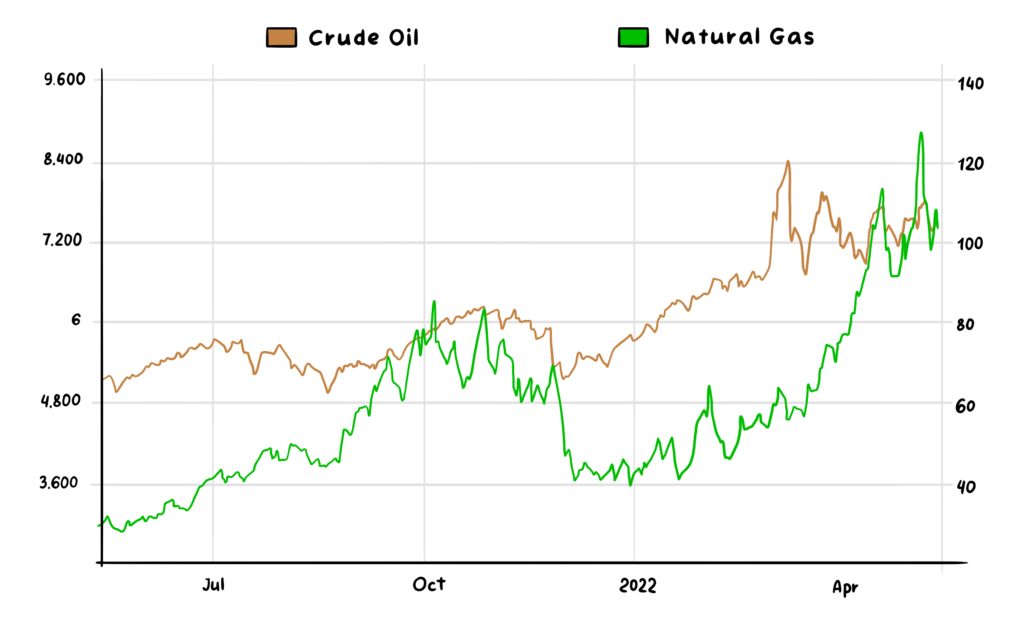
During the past months, global resource prices have spiked, and worries about supply has instilled fear, particularly in Europe
Less Resource Use – Less Dependency
When we created the basic idea for UnTax, there was no war in Eastern Europe. That conflict has had tremendous effects on commodities, leading to shortages and substantial price increases. In a world where inflation already was rising after the Covid pandemic, these events have everyone worried. In this article, we examine how a different tax regime discouraging non-renewable resource use would have changed the landscape.
Few global suppliers for key resources
50 years ago, the majority of natural non-renewable resources were mined domestically or at the very least, regionally. At this time, the U.S. was mining almost everything on its own soil while European countries unearthed their resources regionally or were supplied from the Middle East. As economies grew, consumption increased, environmental standards tightened, and old sources dried up. All of this made mining non-renewable resources increasingly difficult, turning their extraction into a global business with few suppliers. This has created dependencies that gives some key suppliers power over global markets.
Oil and Natural Gas
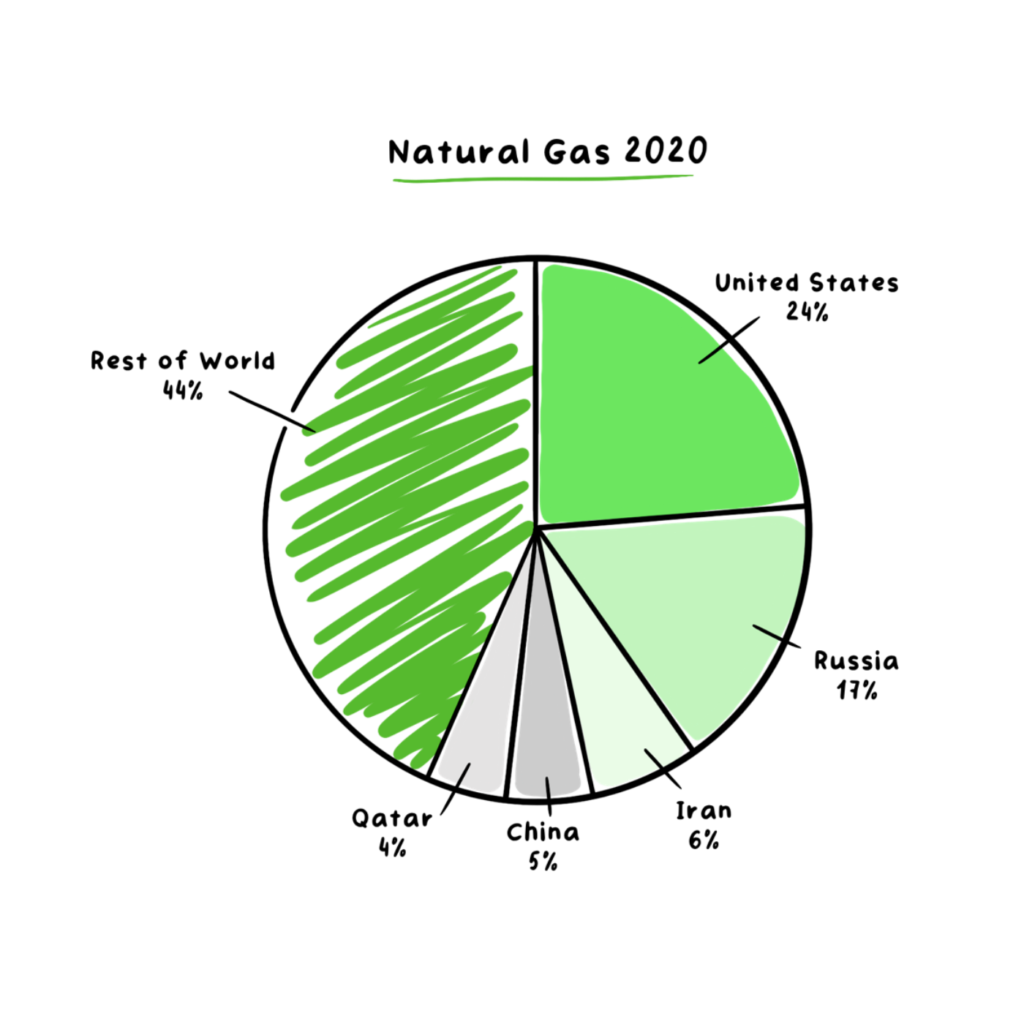
More than 50% of global oil is supplied by five countries. Almost 70% of natural gas is supplied by 7 countries, of which the top two (the U.S. and Russia) account for 41% alone.
Metals and Minerals
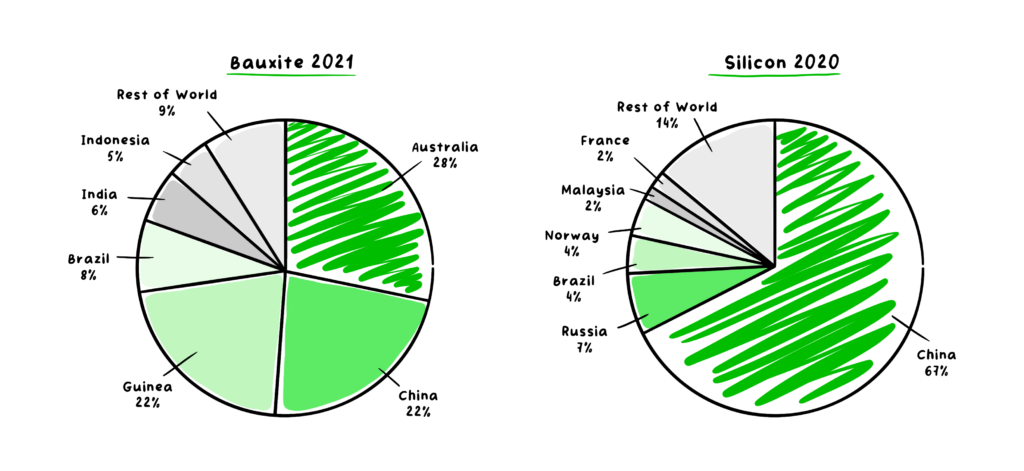
The same is true for many other non-renewable resources, like iron ore (two countries hold 75% of the global market share) or bauxite (4 countries represent 70% of the global market). For many other key commodities like lithium or silicon that are essential to the rapid scale-up of cleaner energy technologies, things look the same.
Rare Earths
For rare earth minerals and metals, the world depends on 4 countries producing more than 90%, with China controlling already more than 60% of the global production.
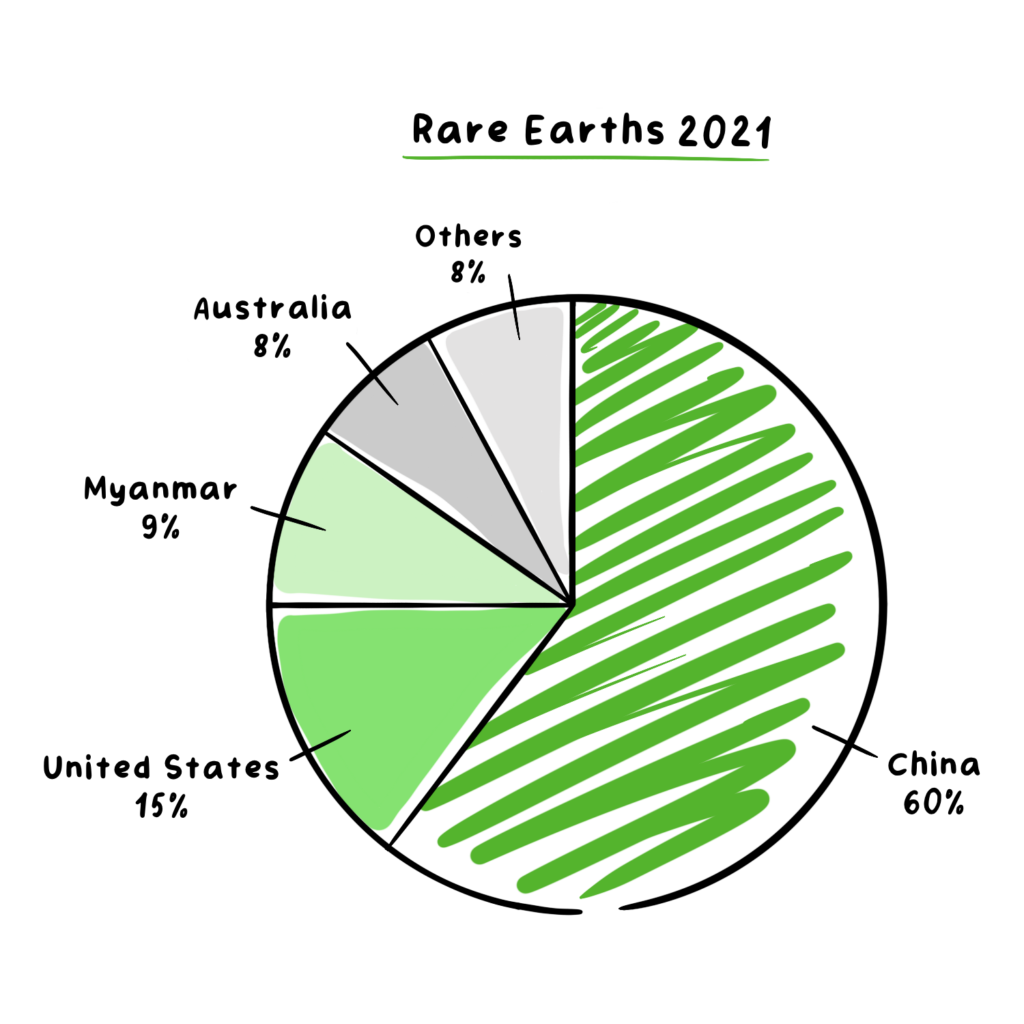
It is important to understand that for many of those materials, particularly for metals and rare earths, this dependence on a few countries only has nothing to do with the availability of deposits in the ground, as these materials can equally be found elsewhere.
In other words, we are collectively extremely dependent on a handful of suppliers for resources that are central to the maintenance of our current reality as well as to the transition to a greener future. As the COVID-19 pandemic and the current war in Ukraine have shown us, the disappearance of any large supplier from world markets has massive consequences for prices and the functioning of global supply chains.
How would 2022 be different with UnTax?
If instead of sticking to business as usual and pushing the global economy to its limits, we had made efforts to limit our consumption of nonrenewable, hard-to-find resources, the reality that we currently face would be much different. The first consequence of a tax regime that burdened non-renewable resources, would have been the encouragement of very different behavior among producers and consumers. This would have had the following primary consequences:
- Non-renewable resources would likely be 2-3 times more expensive than they were before the Covid crisis, (and about 1.5 times as expensive as today);
- Human labor (after tax on wages and profits is removed) would be about 30-40% cheaper than today;
The list of positive secondary consequences is even longer and would secure a completely different situation.
Overall, a tax regime that is built upon taxing what is scarce and non-renewable has many advantages,as it reduces dependency, protects the environment, favors renewable sources, encourages re- and upcycling, and prioritizes human labor as an important provider of work.
From that perspective, changing tax incentives would not only properly incentivize a less wasteful use of natural resources, but equally reduce the reliance on often autocratic and untrustworthy suppliers.

More domestic sourcing
A prioritization of domestic mining resulting from higher prices which would have, in turn, supported proper environmental handling of the process and decent pay for employees,. this would have been true not only for mining, but equally for primary processing (e.g. of aluminum, lithium or silicone)

Lasting products
The production of more expensive products that were designed for longevity and repairability, reducing total cost of ownership;

50% lower consumption
A decrease of roughly 50% in the overall consumption of raw materials, while maintaining the same economic output;

Less dependency
A decrease in dependency on a handful of international resource exporters and the resulting decrease in the risk of large price fluctuations and supply chain disruptions.

More renewables
Soaring investments on renewable energy, resulting in reduced fossil fuel market shares;

Recycling and upcycling
A more robust and productive recycling sector that ensures materials don’t get wasted;